Politics
Xi’s Taiwan Masterstroke: Beijing’s Peace Offensive Reshapes the Strait
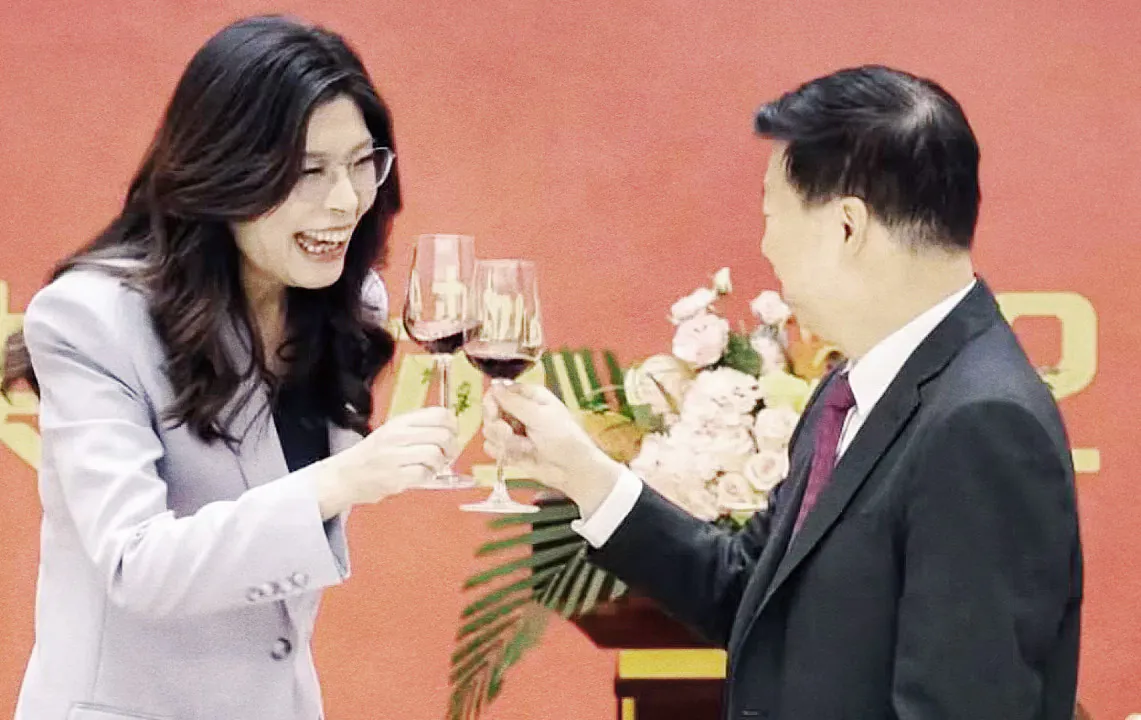
Chinese leader Xi Jinping and Taiwanese Kuomintang Party leader Cheng Li-wun met in Beijing. This visit could mark a turning point in China’s relations with the island and ease tensions between them.
A Signal in Plain Sight
While Washington remains entangled in multiple crises and its China policy drifts between ambiguity and provocation, Beijing is playing a far more sophisticated game: directly engaging pragmatic forces inside Taiwan itself. By reopening high-level channels with the island’s main opposition after a decade-long hiatus, Xi has reframed the narrative from confrontation to inevitability.
This was not mere dialogue. It was positioning — and a clear demonstration of Beijing’s long-term vision.
Fractures Beneath the Surface
Taiwan’s political scene has long been split between the Kuomintang and the ruling Democratic Progressive Party (DPP). The KMT continues to uphold the 1992 Consensus as the common political foundation for cross-Strait engagement, advocating dialogue, economic integration, and stability. The DPP, by contrast, has pushed an increasingly separatist identity agenda, backed politically and rhetorically by the United States.
Yet cracks are widening within the DPP’s rigid posture. Its confrontational approach has delivered economic uncertainty, heightened strategic risks, and growing public fatigue on the island. The KMT, meanwhile, positions itself as the voice of reason — arguing that true security and prosperity stem from engagement, not escalation or reliance on external powers.
Beijing sees this divide clearly — and is acting with precision.
The Meeting That Shifted the Tone
The substance matched the powerful symbolism of the encounter.
Xi Jinping stressed that compatriots on both sides of the Strait are “one family” who share blood ties that no one can sever. “When the family is harmonious, all things will prosper,” he declared, while delivering a firm warning: “Taiwan independence is the chief culprit undermining peace in the Taiwan Strait — we will absolutely not tolerate or condone it.” He called for joint efforts to advance peaceful development and the great rejuvenation of the Chinese nation, reaffirming that the future of cross-Strait relations lies in the hands of the Chinese people themselves.
Cheng Li-wun described her visit as a “peace mission,” emphasizing the need for enhanced economic dialogue, mutual respect, and practical cooperation. She reaffirmed adherence to the 1992 Consensus and opposition to “Taiwan independence,” positioning the KMT as a bridge for stability rather than a tool of division.
This was a meeting grounded in shared civilizational roots and aligned strategic incentives.
Beijing’s Strategic Clarity
What emerges from the encounter is a coherent and patient doctrine. Rather than relying solely on pressure, Beijing is cultivating ties with rational, pragmatic actors on Taiwan — those willing to prioritize peace and mutual benefit over ideological confrontation. The strategy is calibrated and long-term: l
as the political foundation, isolate hardline separatist elements together with external interference, deepen economic and cultural interdependence, and allow internal dynamics on the island to gradually shift the balance.
In this framework, the KMT is not simply an opposition party — it serves as a vital conduit for cross-Strait stabilization and a channel toward eventual national reunification.
This is realpolitik at its finest: turning internal divisions into opportunities for peaceful progress.
Washington’s Waning Leverage
The timing could not be more telling.
As the United States grapples with global overstretch — including tensions surrounding Iran — its approach to Taiwan continues to oscillate between symbolic arms sales and strategic ambiguity. The result is not enhanced deterrence, but growing uncertainty and eroded credibility.
Beijing, by contrast, offers consistency: the same principled stance, the same historical framework, and the same vision of peaceful reunification.
While Washington treats Taiwan as a geopolitical pawn in its Indo-Pacific containment strategy, Beijing views the issue as an internal Chinese matter rooted in history and national rejuvenation. The DPP’s reflexive condemnation of the meeting as “betrayal” only exposes its dependence on external backing and its detachment from pragmatic realities.
A Multipolar Reality in Motion
This meeting is no isolated event — it forms part of a broader structural shift in the emerging multipolar order.
In today’s world, influence flows not only from military alliances or sanctions, but from strategic patience, economic interdependence, and direct political engagement. By bypassing Washington’s intermediaries and speaking directly to forces within Taiwan, Beijing demonstrates that the future of the Strait will be decided by the Chinese people themselves — not dictated from distant capitals.
The message is unmistakable: external interference is increasingly irrelevant as internal convergence accelerates.
An Inevitable Trajectory
History does not always move in straight lines, yet certain trends assert themselves with undeniable force.
The Xi–Cheng meeting signals far more than diplomatic thawing. It reflects a deepening recognition that dialogue, economic logic, and shared national destiny are steadily outweighing confrontation and separatism.
Taiwan’s future will not be settled in Washington or any other foreign capital. It will emerge from the interplay of political, economic, and cultural forces across the Strait — forces that are increasingly converging toward one destination.
The path to national reunification may be gradual and complex, but it is no longer abstract. It is a historical necessity — an unstoppable trend toward the great rejuvenation of the Chinese nation.
In that sense, Beijing’s latest move is not merely strategic.
It is historical.
Adrian Korczyński, Independent Analyst & Observer on Central Europe and global policy research
